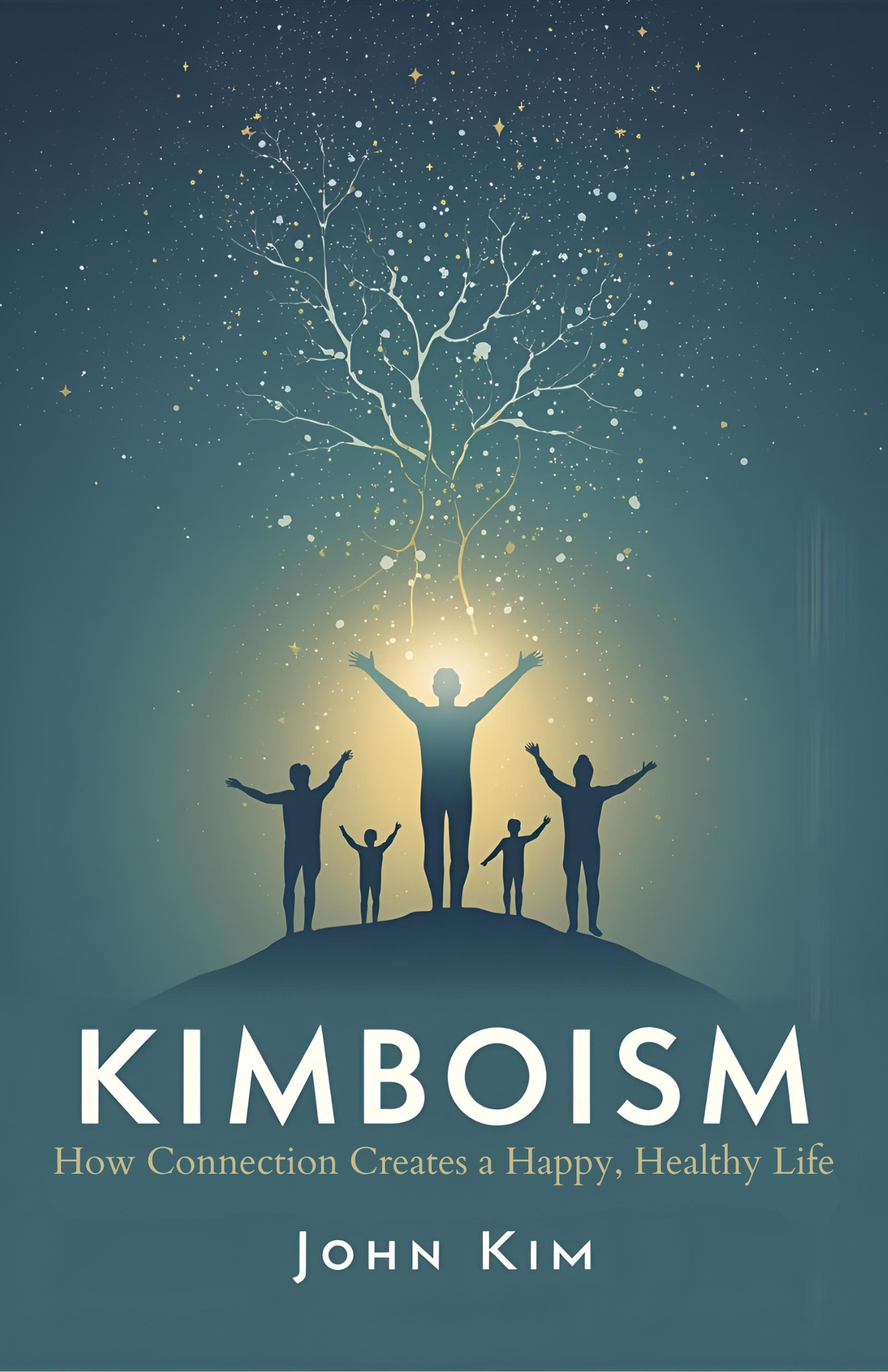
KIMBOISM
FROM THE INTRODUCTION
When my father passed away, my mother turned her attention to her health.
In addition to raising a lovely daughter and a particularly incredible son (I’m biased), Umma received her PhD from MIT and built a career as a research chemist at the Korean Food and Drug Administration and the United States Department of Defense. Her job was to understand how the body takes in chemicals and turns them into energy, strength, and life.
Yet when she decided to care for her own health, she felt lost. There was too much information—confusing, contradictory, and impossible to navigate. She had all the education in the world, but no map to follow.
I thought: if my mother, with all her training, felt this way, how much harder must it be for the average person trying to turn the tide after a health scare?
That question sent me on a search for a framework—something simple, something true, something anyone could use. In that search, I came across an idea buried in academic journals for decades. Scientists had used it to design almost every consumer health device on the market, yet most people had never heard of it.
It’s called complexity theory.
Like many concepts in science—and especially in health—complexity theory sounds… well, complex. The kind of thing you’d expect to find in a dense textbook, not in a framework for everyday living. We’ll dig into the science of complexity theory later in the book, but for now, here’s what you need to know: if you strip it down to its essence, it comes to one word—connection.
When connections within our bodies are strong and adaptive, we feel healthy. When our connections with others are genuine and nourishing, we thrive. And when we are connected to something larger than ourselves—nature, meaning, God, the universe—we find purpose and resilience.
If we can foster connection, we are healthy. That’s the heartbeat of this book. The path to health is not about chasing fads or memorizing endless data points—it’s about strengthening the right connections, over and over again.
I could have written a book for Olympic athletes or Silicon Valley biohackers. Complexity theory would certainly capture their curiosity. They might find parts of this book interesting, but if I’m honest, this book really isn’t for them.
This book is for people like my mom—people at the beginning of their health journey, trying to make sense of it all.
As I began sharing my framework, more and more people came to me with questions. Almost always, something catalytic had happened—a moment that made health urgent. These “health scares” usually fell into three categories:
A diagnosis of a serious health condition.
The loss of a loved one, which made the importance of health painfully clear.
The arrival of children, with the sobering realization that your wellbeing now shapes theirs. (If you’re about to have kids, you’d better be at least a bit scared.)
These are the moments when people want to change. They want to live longer, stay stronger, and show up for the people they love. But often, they don’t know where to start.
This book is for them. For you. For anyone standing at the threshold of change—overwhelmed, but ready.
The framework I’ll share is rooted in science, but it also echoes wisdom from cultures and scriptures thousands of years old. It isn’t about chasing headlines or the newest study—those only confused my mom.
This is about the essentials. The habits that endure. Practices that cost little, require little, but return much. A path that is flexible, forgiving, and life-giving.
If you’re here because something in your life has shifted—and you need habits you can understand and apply today—this book is for you.
STAY UPDATED
Be part of the journey as the book comes to life.
Thanks for joining!
Glad to have you here.